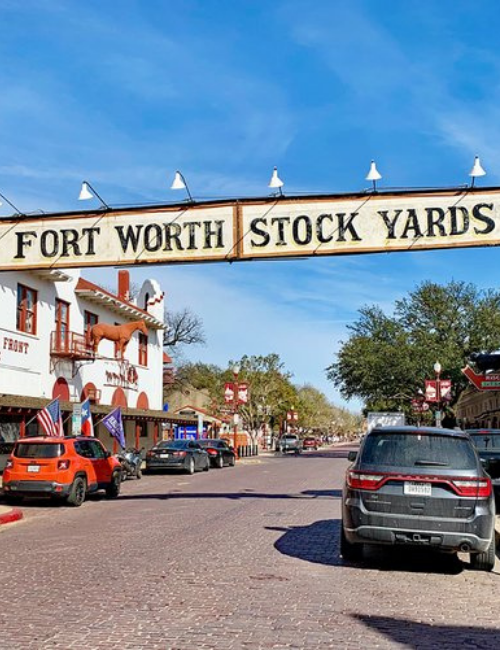

Fort Worth has a lot going for it, attracting new residents with affordable housing and a climate that lets you enjoy real seasons without freezing. But not every neighborhood is worth considering; you could end up in a fantastic area or somewhere that makes you question your choices. The differences between streets can be huge, which is why Dallas cash buyers pay close attention before making a move.
We’re breaking down exactly where you want to live and which areas you should avoid. We’re going to examine crime statistics, safety ratings, and what actually makes a neighborhood dangerous. You’ll know which Fort Worth neighborhoods let you sleep easily and which ones keep the local police busy!
The Safest Neighborhoods in Fort Worth
If you want to stop worrying about your car getting broken into or sketchy characters hanging around at night, these neighborhoods are your best choice. Crime rates remain low in these areas, and people look out for one another. You can actually let your kids play outside without hovering like a helicopter parent.

Blue Mound: Top Safety Rankings in Fort Worth
Blue Mound is very serious about safety. This neighborhood pulls an A-minus overall, with violent crime scoring an A-minus and property crime getting a straight A. Only about 2,600 people live here, so it’s got that small-town vibe where your neighbors actually know your name.
Most residents own their homes instead of renting, which typically means they take pride in maintaining them. The schools also receive good marks. You’re close enough to Fort Worth for work but far enough out that it feels peaceful and a little rural. Traffic’s not a headache, and crime barely registers on anyone’s radar here.
Edgecliff Village: A Secure Community
Edgecliff Village lands another A-minus for overall safety, though property crime drops to a C-plus, so you’ll still want to lock your doors. Around 3,715 people call this neighborhood home.
The community’s pretty diverse. You’ll see young professionals working hard through their careers alongside retirees enjoying their golden years. Schools rank well, and the housing quality is excellent. People tend to stick around once they move in.
The area has character without feeling sketchy, and violent crime remains refreshingly low, earning an A-minus rating.
Westover Hills: Upscale Living with Low Crime
Westover Hills keeps it small, with just 803 residents, most of whom are retirees enjoying the quiet life. Safety grades come in at a B overall, with violent crime earning an A-minus. Property crime rates are a C because even in nice neighborhoods, occasional burglaries occur.
About 90% of homes are owner-occupied, showing that people are genuinely invested in the community. You get a spacious, rural feel while still having restaurants, bars, and coffee shops within easy reach, which is how Pioneer Home Buyers can help you navigate the local market.
It’s one of Fort Worth’s pricier suburbs, but you’re paying for peace of mind and actual space to breathe.
Tanglewood: Family-Friendly and Safe
Tanglewood sits tucked in the southwest corner of Fort Worth, still inside the 820 loop, so you’re not stranded in the suburbs. Families love this neighborhood because crime rates remain low, and the community genuinely feels like a cohesive community.
Hartwood Park cuts right through the area and hooks up with the Trinity River trail system, so if you’re into running, biking, or just getting outside, you’ve got options. Giant oak and pecan trees give the whole neighborhood that established, mature look as well.
Homes run around $500,000 for a decent 3 to 4-bedroom place. You’re also close to TCU for Big 12 sports, and Colonial Country Club hosts a PGA tournament every year if golf’s your thing.
Fort Worth’s Most Dangerous Neighborhoods
There are also areas in Fort Worth you should skip. These neighborhoods consistently rank at the top for both violent crime and property crime. The stats don’t lie, and locals who know Fort Worth will tell you the same thing. These areas have real safety issues that are unlikely to improve anytime soon.
Downtown Fort Worth
Downtown scores 346% more crime than the rest of Fort Worth, which is quite staggering. With only about 4,481 people actually living downtown, you’d think crime would stay manageable, but that’s not how it works.
There are 2,044 incidents of crime per 100,000 people. A lot of that comes from the bar scene and late-night crowds mixing with people who are homeless or struggling with addiction.
During business hours, downtown’s fine. There are lots of office workers, tourists checking out Sundance Square, and people grabbing lunch. But once the sun sets and the bars start filling up, things can get sketchy fast.
Car break-ins happen regularly, and you’ll see fights spill out onto the streets on weekends. If you’re considering living downtown for its walkability and nightlife, be aware that you’re trading convenience for a higher risk.
Southside
Southside’s got 56,682 residents dealing with crime rates 122% higher than Fort Worth’s average. Violent crime clocks in at 1,019 incidents per 100,000 people, which means assaults, robberies, and worse happen way too often.
This neighborhood’s been struggling with poverty for decades. That economic pressure is reflected in the crime statistics. You’ll find some hardworking families trying to make it work, but you’ll also run into areas where gang activity and drug problems create constant tension.
Property crime is also an issue. People steal anything not nailed down, from packages off porches to catalytic converters in broad daylight. Some blocks feel okay during the day, but even locals will tell you to avoid certain streets entirely after dark.
South East Fort Worth Neighborhoods
South East Fort Worth encompasses a vast area with a population of 59,810. Violent crime is 107% higher than the city average, with 947 incidents per 100,000 residents.
This part of town’s a mixed bag. You’ll find some decent pockets sandwiched between rougher areas where crime’s just part of daily life. Drug activity drives a lot of the problems in this area, and property crime stays consistently high.
People get their homes broken into, cars stolen, and bikes swiped from yards. The schools don’t rank significantly either, which doesn’t help families wanting to put down roots.
Some people have lived here their whole lives and know which blocks to avoid, but if you’re new to Fort Worth, this isn’t where you want to learn the ropes.
Stop Six and the Eastside
Stop Six’s reputation precedes it. This neighborhood’s been known as one of Fort Worth’s roughest areas for years. The Eastside overall sees violent crime rates 68% higher than Fort Worth’s average. To be specific, it happens 768 incidents per 100,000 people across a population of 95,072.
Stop Six deals explicitly with gang violence, shootings, and drug-related crime that keep residents on edge. You’ll hear gunshots at night more often than anyone should have to. Additionally, retaliation violence cycles through the neighborhood regularly.
Property crimes are also rampant, as people often believe they can get away with them. The community has some beautiful old houses with character and charm, and residents will tell you there are genuinely good people trying to make it better. But the reality is you’re rolling the dice on safety if you move here.
Even delivery drivers and rideshare apps sometimes refuse to service specific addresses in Stop Six after dark.
Fort Worth Neighborhoods with Mixed Safety Records
Not every neighborhood falls neatly into the categories of “safe” or “dangerous.” These areas sit somewhere in the middle. They have issues, but they’re not complete disaster zones either. You might feel fine on some streets and uneasy two blocks over.
Western Hills-Ridglea Area
Western Hills-Ridglea shows violent crime 84% higher than Fort Worth’s average. Eight hundred forty-three incidents happen per 100,000 people among 43,278 residents. This neighborhood has history, and some genuinely nice parts, but crime has crept up over the years.
You’ll find older homes with big yards next to apartment complexes where problems tend to concentrate. There are property crimes that occur regularly, including car break-ins, stolen packages, and occasional garage burglaries.
Some sections near Ridglea Country Club feel pretty safe and suburban, while other blocks closer to major roads see more trouble. If you’re considering this area, drive around at different times of day and pay attention to how well-maintained the properties look. That’ll tell you which blocks actually have residents who care versus which ones are struggling.
Northside Fort Worth
Northside’s population of 44,752 deals with violent crime 62% above the city average at 742 incidents per 100,000 people. This area has been gentrifying in spots, particularly around the Como neighborhood, where younger folks are buying fixer-uppers and trying to revitalize the area.
You’ll see hipster coffee shops popping up next to run-down buildings that haven’t been touched in decades. There’s a big contrast. Crime’s definitely present, but not overwhelming like in Southside or Stop Six.
You need to be smart about where you park and don’t leave valuables visible in your car. You should also think twice about walking alone late at night.
Some people love Northside for its affordability and the neighborhood’s potential, but you’re betting on the area improving over time rather than buying into established safety concerns.
What Makes a Fort Worth Neighborhood Dangerous?
Fort Worth’s most dangerous areas share some common threads that keep them stuck in cycles of violence and property crime.
The Impact of Poverty on Crime Rates
Poverty and crime feed off each other like a vicious loop that’s hard to break. When people can’t find decent jobs or afford necessities, desperation kicks in.
You’ll see higher unemployment rates in places like Southside and Stop Six. That economic pressure pushes some people toward illegal activity just to survive.
Kids grow up watching this, and the cycle continues. Families in these neighborhoods often lack access to quality education, resulting in fewer opportunities to escape poverty.
Healthcare’s harder to access, too, so physical and mental health issues go untreated. The houses start falling apart because nobody can afford repairs. Businesses close down or never open in the first place, and the entire area begins to look neglected.
That visual decay signals to criminals that nobody’s watching, nobody cares, and they can operate without much pushback.
It’s not that people in poor neighborhoods are inherently more likely to be involved in crime. They’re just dealing with circumstances that make crime more likely to happen and harder to prevent.
Economic Challenges in DFW’s Risky Areas
The DFW area is booming overall, but its growth hasn’t been equally distributed across every neighborhood. While tech companies set up shop in North Dallas and suburbs explode with new development, parts of Fort Worth get left behind completely.
These economically challenged areas see businesses pack up and leave, taking jobs with them. What’s left are dollar stores, check-cashing places, and liquor stores, not precisely the foundation for a thriving community.
Without legitimate economic opportunities, underground economies take over. Drug dealing becomes one of the few ways to make real money, and that brings gang activity, turf wars, and violence.
Police presence in these areas is often reactive rather than preventive. They show up after crimes happen instead of building relationships with residents. The lack of investment creates a self-fulfilling prophecy, where the neighborhood’s reputation continues to deteriorate, property values decline, and anyone who can afford to leave does so.
You end up with concentrated poverty. There are fewer resources, and crime continues to rise year after year.
Best Neighborhoods for Families in Fort Worth
If you have kids or plan to have them, safety takes top priority. These Fort Worth neighborhoods offer families what they truly need: quality schools, parks where children can play, and trustworthy neighbors.
Walsh: Community Amenities and Schools
Walsh is essentially a family paradise, if you can afford the price tag. This master-planned community goes all out with amenities that genuinely cater to families. It features 32 miles of hiking and biking trails that connect every single home to parks. There are also resort-style pools where your kids will beg to spend every summer day, and a legitimate beach on the community lake.
The fitness facility isn’t some sad room with three treadmills. It’s state-of-the-art, featuring basketball courts, racquetball courts, and classes. Schools in the area rank well, and the whole community’s designed so kids can bike to friends’ houses or the park without parents freaking out.
The Village serves as the community center with a market, makerspace, and coworking spaces, so there’s always something happening. Two-gigabit internet is included in HOA fees, which is very useful if you work from home or have teenagers constantly using their devices.
Homes start around $375,000, and lots begin at $95,000 if you want to custom build. It’s pricey, but you get what you pay for, which is a safe, connected community where families actually thrive.
Benbrook: Outdoor Living for Families
Benbrook offers families a suburban feel without the high price tags typically found closer to downtown Fort Worth. With about 10,000 households, it’s big enough to have its own identity but small enough that you’ll start recognizing faces at the grocery store.
The massive Benbrook Lake dominates the southern edge of town. It offers waterfront views and endless outdoor activities, such as fishing, boating, hiking, and picnicking, whatever gets your family outside.
Green space is also abundant, so kids grow up with actual room to play instead of being confined indoors. The commute to downtown Fort Worth runs about 20 minutes, which is totally manageable for parents working in the city.
Housing costs significantly less than in Fort Worth proper. You can find lovely family homes under $200,000, which is almost unheard of these days. Overall, schools are decent, and crime stays low. The whole area feels like the kind of place where neighbors still chat over the fence, and kids ride bikes until the streetlights come on.
Safe Fort Worth Neighborhoods with Top-Rated Schools
Parents obsess over school ratings for good reason: education sets kids up for life. Tanglewood, Overton Park, and Ridglea Hills are still the top choices for safety and strong schools. That is why they’re total magnets for families.
These neighborhoods have an established community vibe, where people actually know each other and look out for one another’s kids. Crime rates stay impressively low because residents have invested in the area for years, sometimes decades.
The houses tend to be larger with real yards where kids can play. You’ll also see families out walking dogs or pushing strollers pretty much any time of day.
Schools in these areas get good funding and involved parent groups. Additionally, teachers tend to stay rather than leave after a year.
Moreover, the property values here remain steady or climb, indicating that people want to live here and stay. You’re paying a premium compared to rougher neighborhoods, but you’re buying peace of mind along with the house.
Your kids can walk to school safely and play at parks without you hovering nervously over them. They can grow up in a community that actually functions the way suburbs are supposed to.
Historic Fort Worth Neighborhoods Worth Considering
Fort Worth’s got some neighborhoods with serious history and architecture that make you stop and stare. These areas have survived decades of change and still maintain that old-school charm that can’t be faked with new construction.

Fairmount-Southside Historic District
Fairmount is one of the largest historic districts in the entire southwestern United States. The homes here are stunning. There are craftsman-style beauties, Victorian stunners, and landmarks like the Meredith Benton House that architecture nerds drool over.
You’d think a neighborhood this special would cost a fortune, but you can actually snag a 3-bedroom craftsman for around $350,000 or a bigger 5-bedroom place for $450,000. Magnolia Avenue runs along the north side with fantastic restaurants, coffee shops, and nightlife.
The entire area is super walkable, which is rare for Texas, where people usually drive everywhere. You get that close-to-downtown convenience without actually living in the middle of the chaos.
Westcliff: Central Location with Character
Westcliff flies under the radar compared to flashier Fort Worth neighborhoods, but locals in the know really love it. The location’s unbeatable. You’re sandwiched between I-20 and I-30, so getting anywhere in Fort Worth takes at most fifteen minutes.
The Fort Worth Zoo, consistently ranked as the number one zoo in the country, is located nearby. Most homes were built in the 1950s and 1960s, featuring the classic single-story ranch style on large lots. They have a perfect price range between $250,000 and $450,000.
First-time buyers are drawn to this area because they can increase a home’s value through renovations without spending a fortune. With spots like Cafe Bella, named Fort Worth Magazine’s best Italian restaurant and packed nightly, the neighborhood buzzes with life, making it a great choice for investor home buyers in Fort Worth and surrounding Texas cities.
How to Evaluate Fort Worth Neighborhoods
You can’t just pick a Fort Worth neighborhood based on cute houses or good Zillow photos. You need to thoroughly study the data and understand what you’re getting into before signing anything or making an offer.
Researching Crime Statistics in Fort Worth, TX
Crime stats tell you way more than any real estate agent’s sales pitch ever will. Check out websites like CrimeGrade.org or NeighborhoodScout, which compile data from sources such as the Fort Worth police, the FBI, and other relevant organizations.
Consider both violent crime and property crime, as they paint different pictures. A neighborhood might have low assault rates but constant car break-ins, or vice versa.
Pay attention to trends, too. Is crime dropping or climbing over the past few years? Some areas are improving, while others are deteriorating. The Fort Worth Police Department publishes crime maps that show precisely where incidents occur, allowing you to zoom in on specific streets instead of just receiving neighborhood averages.
Don’t rely on one source either. Cross-reference multiple sites to ensure the data aligns and you’re seeing the complete picture.
Understanding Property Crime vs. Violent Crime
Property crime and violent crime happen in Fort Worth a lot, and you need to know which one bothers you more. Property crime includes activities such as burglary, car theft, vandalism, and package theft. It’s annoying as hell and costs you money, but you’re not usually in physical danger.
Violent crime covers assault, robbery, murder, and sexual assault, the stuff that actually puts your safety at risk. Some Fort Worth neighborhoods score okay on violent crime but poorly on property crime, meaning your person’s probably safe, but your belongings aren’t. Other areas are different.
If you’re really set out to live here, think about what you can tolerate because perfection doesn’t exist in a city this size. If you work from home and have expensive equipment or property, property crime might worry you more. If you have kids walking to school, violent crime becomes your primary concern.
Both matter, but knowing which one keeps you up at night helps you prioritize when comparing neighborhoods.
Visiting Worth Neighborhoods Before You Move
Data only tells you so much. You need boots on the ground to really get a feel for Fort Worth neighborhoods.
Drive through at different times of day, not just during that perfect Sunday afternoon when everything looks great. Roll through on a Tuesday night around 9 PM and see what’s happening on the streets. Are people out walking dogs, or are the streets dead and sketchy?
Take a look at how well-maintained the properties appear. Overgrown yards, boarded-up windows, and trash piling up are red flags that residents have checked out or can’t afford basic upkeep.
You may also want to stop at a local coffee shop or restaurant and chat with people who actually live there. Ask them straight up if they feel safe, if their cars get broken into, and what the noise level’s like.
Most people will give you honest answers if you’re open and approachable about it. Trust your gut, too. If something feels off about a neighborhood, even if the stats look okay, that instinct probably means something.
Key Takeaways: Fort Worth, TX Best and Worst Neighborhoods Guide
Fort Worth’s got neighborhoods where you can leave your garage open and spots where you triple-check your locks every night. As we’ve shared, Blue Mound, Tanglewood, and Westover Hills deliver actual safety, while Downtown, Southside, and Stop Six keep the police busy.Stuck in a sketchy Fort Worth neighborhood and ready to bail? Pioneer Home Buyers buys houses anywhere in the city, no matter the condition or location. Call (817) 382-1155 for a cash offer and get out fast.
Helpful Fort Worth Blog Articles
- How to Sell a House in Probate in Fort Worth, TX
- Can You Sell a House in Foreclosure in Fort Worth, TX?
- How to Sell a Fire-Damaged House in Fort Worth, TX
- How to Do a Sale by Owner in Fort Worth, TX
- Can You Sell a House with Tenants in Fort Worth, TX
- Is Fort Worth, TX, a good place to live?
- Fort Worth, TX Neighborhood Map
- Fort Worth, TX Capital Gains Tax Calculator
- Fort Worth, TX Cost of Living: Is It Affordable?
- Best Fort Worth, TX Property Managers
- Best and Worst Neighborhoods in Fort Worth, TX
- Fun Facts about Fort Worth, TX
- Fort Worth, TX Property Tax Rates
- Selling Home with Reverse Mortgage
- Selling a Home in Fort Worth, TX, That Needs Repairs
- How to Sell a House with Title Issues in Fort Worth, TX